
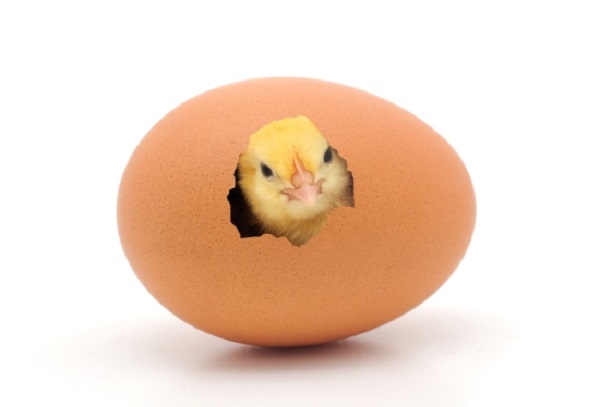
How to Incubate Chicken Eggs in 4 Steps – Mothering chicken eggs isn’t for everybody, except in the event that you figure it very well may be your reason for living, here’s the way to do it.
When a hen lays a grasp of eggs, senses dominate. They continually get worked up about them, changing them only so for the duration of the day and seldom leaving the home for in excess of a couple of moments. Parenthood is a major duty regarding a youthful hen – if she’s even the slightest bit careless, her infants will never incubate. Or then again more terrible, they may bring forth with deformations.
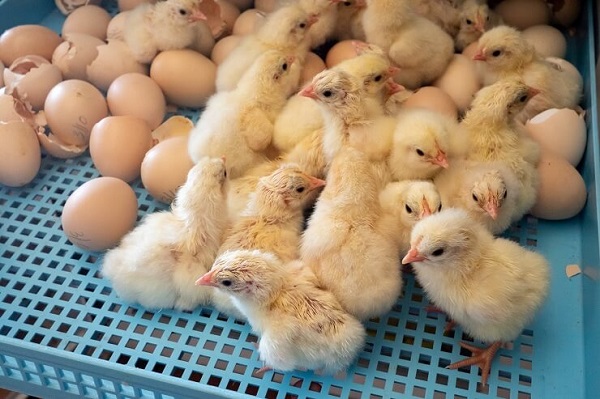
Current chickens, it ends up, are not in every case exceptionally powerful moms. Regardless of whether it’s hereditary or culture, who knows, yet they get occupied, different hens remove them from their home, the chicken stops by… there’s no deficiency of things that can turn out badly. Consequently, most ranchers and patio chicken lovers don’t confide in hatching to their hens, they volunteer to accomplish the brood work all things considered. You can likewise purchase day-old chicks and avoid the hatching cycle, yet it costs more. Also, for what reason would you need to pass up an occasion to encounter one of life’s wonders?
How to Incubate Chicken Eggs in 4 Steps
Stage 1 – Set Up an Incubator
Contingent upon the number of eggs they oblige and how computerized they are, Incubators run from around $50 for the homesteader most loved ‘Hova-Bator’ into the great many dollars for business scale hatcheries. With first in class hatcheries, you put in an egg, close the entryway and out pops the chick three weeks after the fact. You can likewise go the DIY course, which sets aside cash, however is nearly as much work as sitting on the eggs yourself. Regardless of how extravagant or improvised, all hatcheries must achieve a couple of fundamental things:
Temperature: The eggs should be kept at 99.5 degrees consistently; only one degree higher or lower for a couple of hours can end the incipient organism.
Moistness: 40 to 50 percent mugginess must be kept up for the initial 18 days; 65 to 75 percent dampness is required for the last days prior to bring forth.
Ventilation: Egg shells are permeable, permitting oxygen to enter and carbon dioxide to leave; hatcheries need to have openings or vents that permit outside air to course so the babies can relax.
Custom made forms for the most part include a type of protected box – a modest Styrofoam cooler will do. A flexible warming cushion or a light on a dimmer switch will do the trick for the warmth source and a skillet of water with a wipe in it will make the air sticky. Low-end business hatcheries don’t add up to substantially more than this, yet the more you pay, the more computerized the temperature and moistness controls will be.
A great thermometer and hygrometer (a gadget to quantify stickiness) are the main devices of brooding; modest models are normally not precise enough. In case you’re not working with a hatchery that has these instruments underlying, select a combo thermometer/hygrometer with an outside presentation. These have a sensor that goes inside the hatchery with a LED screen outwardly that shows the temperature and dampness readings without opening the hatchery and ruin your deliberately aligned climate.
Once sparing component is a gadget to pivot the eggs naturally. A significant part of the objecting that a hen does over her eggs comes from a developmental intuition to continually move them about. The finely tuned biological system inside a chicken egg is kept in balance by continually changing the situation of the egg. Top of the line hatcheries have an underlying egg turning gadget, yet there are likewise independent egg turners that can be put inside a natively constructed hatchery to take care of the work. Or then again, you can pivot physically as indicated by the directions beneath.
The hatchery ought to be put in an area with the most un-conceivable vacillation in temperature and dampness for the duration of the day – a cellar is ideal, a bright window isn’t.
Stage 2 – Find Fertile Eggs
On the off chance that you as of now have a herd of chickens that incorporates a chicken, most of the eggs they lay will be ripe. Gather them at the earliest opportunity subsequent to laying and move to the hatchery. On the off chance that you don’t as of now have chickens, discover a companion or a close by rancher who does and inquire as to whether you can get some fruitful eggs. Sites like Craigslist and BackyardChickens.com are a decent method to interface with individuals that may have eggs to save. Some feed stores sell ripe eggs in the spring and there are numerous providers that sell eggs on the web.
The closer to home, the better the egg source. The jarring about and vacillations in temperature and stickiness that happen during transport are difficult for the creating embryo. Incubating rates on eggs directly from the coop are frequently in the 75 to 90 percent range; with mail-request eggs, there is no assurance that any will bring forth.
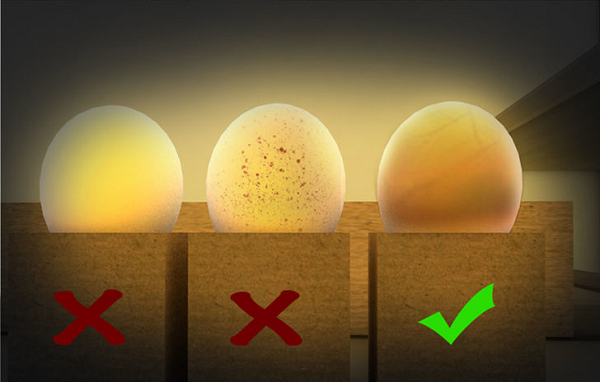
When picking eggs to brood, utilize those that are spotless, all around shaped and full-size. Most importantly, don’t perfect the eggs – there is a normally happening covering that is indispensable to the accomplishment of the incipient organism. Wash your hands prior to taking care of and be as delicate as could reasonably be expected, as the incipient organisms are amazingly helpless to harm from abrupt developments.
In a perfect world, the eggs are moved legitimately to the hatchery, yet it’s conceivable to store them in egg containers if necessary. Kept at temperatures somewhere in the range of 50 and 60 degrees and 75 percent mugginess, the advancement of the eggs can be deferred for as long as ten days without relinquishing the suitability of the undeveloped organisms. Notwithstanding, they should be put away with the fat side of the egg faced up to keep the undeveloped organism alive.
Stage 3 – Incubate
It takes 21 days on normal for an egg to bring forth once hatching starts. Prior to setting the eggs inside, turn on the warmth source and measure the temperature and moistness over a 24-hour time frame, making changes as important to establish the ideal climate. In the event that the stickiness is excessively high or low, utilize a wipe with pretty much surface region to change it. Raise and lower the temperature of the warmth source in little augmentations until the thermometer peruses 99.5.
When the hatchery is working appropriately, it’s simply an issue of keeping up the climate until the chicks bring forth. Spot the eggs on their side in the hatchery, close the entryway and check the levels strictly to ensure nothing goes to one side. Water may must be added to the container at times to keep the moistness up. At day 18, add more water to help the moistness level.
In case you will turn the eggs yourself, there is a standard technique to emulate the endeavors of a hen:
Draw an ‘X’ on one side of the egg and an ‘O’ on the other to monitor which eggs have been turned.
At any rate three times each day, delicately turn the eggs over; more successive turning is stunningly better, however the quantity of turns every day ought to be odd (3,5,7 and so on) with the goal that the eggs are never laying on similar side for two sequential evenings. Specialists likewise suggest exchanging the heading of turning each time – the objective is to fluctuate the situation of the incipient organism however much as could be expected.
Keep turning until day 18, however then disregard the eggs throughout the previous few days.
Stage 4 – Hatching
In the last days prior to bring forth. the eggs might be noticed moving about all alone as the hatchling gets dynamic. The chick will in the end peck a little opening in the huge finish of the egg and take its first breath. It is typical now for the chick to rest for six to 12 hours while its lungs change prior to proceeding to bring forth. Fight the temptation to help with the bring forth measure – it’s anything but difficult to cause injury!
When the chick is liberated from the egg, let it get dry in the glow of the hatchery prior to moving it a brooder, where it will go through the main long stretches of its life.
How to Incubate Chicken Eggs in 4 Steps
- YouTube Channel: Farming South Africa
- Facebook Page: Farming Life
- General Farming Farming South Africa
How to Incubate Chicken Eggs in 4 Steps
Hi Team
please send me more info with regards to hatching feritle eggs.. i am really interested in mastering this process